Expense Tracking
Tips and tools to monitor spending
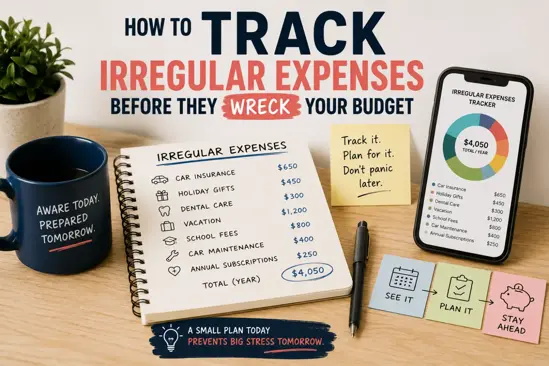
How to Track Irregular Expenses Before They Wreck Your Budget
How to Track Irregular Expenses Before They Wreck Your Budget
If your monthly budget looks fine on paper but still falls apart every few weeks, irregular expenses are probably the reason. These are the bills and occasional costs that do not arrive neatly every month: car repairs, annual insurance premiums, school costs, birthday gifts, medical bills, holiday spending, tax payments, appliance repairs, and more.
The problem is not always overspending. Often, the problem is timing. A €600 car insurance bill can feel like an emergency if you only planned for rent, food, transport, and utilities this month. But if you had saved €50 per month for it all year, it would be a normal bill instead of a budget crisis.
This guide explains exactly how to track irregular expenses using a simple expense tracking system. You will learn how to find them, estimate them, convert annual costs into monthly savings targets, and keep them visible before they wreck your budget.
What Are Irregular Expenses?
Irregular expenses are costs that do not happen every month or do not cost the same amount each time. They may be predictable, such as annual insurance, or unpredictable, such as a broken washing machine. Either way, they are real expenses and need a place in your budget.
There are three common types:
- Fixed non-monthly bills: predictable bills paid quarterly, twice yearly, or annually, such as insurance premiums, vehicle tax, TV licence, professional subscriptions, or property-related charges.
- Variable occasional costs: costs that happen throughout the year but change in amount, such as gifts, school trips, clothing, dental care, car maintenance, or pet costs.
- Unexpected expenses: repairs, medical costs, emergency travel, replacement appliances, or other costs that are hard to predict but likely to happen eventually.
A strong irregular expenses budget does not pretend these costs will disappear. It spreads them across the year so you are ready when they arrive.
Why Irregular Expenses Break Most Monthly Budgets
Most people build a monthly budget around regular bills: rent or mortgage, groceries, utilities, transport, phone, subscriptions, and debt payments. This works for stable monthly spending, but it fails when a large non-monthly bill appears.
For example, imagine your normal monthly budget leaves you with €150 spare. That feels safe until the following bills arrive in the same month:
- Annual car insurance: €520
- School supplies and activities: €180
- Two birthday gifts: €90
- Dental appointment: €110
That is €900 of extra spending in one month. If you did not plan ahead, you may use a credit card, dip into emergency savings, delay another bill, or feel like budgeting does not work.
The monthly budget is not the problem. The missing category is the problem. Budgeting for irregular bills means treating occasional costs as monthly responsibilities before they become urgent.
Common Irregular Expenses You Should Track
Start by making a broad list. Many irregular costs are easy to forget because they only happen once or twice a year. Use the categories below to jog your memory.
- Car and transport: insurance, vehicle tax, inspection, servicing, tyres, repairs, parking permits, public transport passes, tolls.
- Home: annual service contracts, boiler maintenance, property tax, council or municipal charges, repairs, furniture, small appliances.
- Insurance: car, home, health, life, travel, pet, contents, professional liability.
- Medical and dental: check-ups, prescriptions, glasses, dental treatment, physiotherapy, specialist appointments.
- Family and school: school supplies, uniforms, trips, sports fees, childcare changes, exam fees.
- Gifts and celebrations: birthdays, weddings, Christmas, religious holidays, anniversaries, family events.
- Travel: flights, accommodation, passports, luggage, travel insurance, holiday spending.
- Pets: vaccinations, vet visits, grooming, insurance excess, food price changes.
- Subscriptions and memberships: annual software, gym fees, professional memberships, streaming plans paid yearly.
- Taxes and admin: self-employment tax, accountant fees, visa or residency paperwork, document renewals.
You do not need a perfect list on day one. The goal is to create a tracker that improves every month.
Step 1: Review the Last 12 Months of Spending
The best way to learn how to track irregular expenses is to look backwards before planning forward. Open your bank statements, card statements, budgeting app, or spreadsheet and review the last 12 months.
Search for payments that were:
- Larger than your usual daily spending
- Paid quarterly, twice yearly, or annually
- Related to repairs, maintenance, gifts, medical care, school, pets, or travel
- Costs that made you say, “I forgot about that”
If you use multiple bank accounts or credit cards, check all of them. Irregular expenses often hide across different payment methods. For example, you may pay insurance from your current account, gifts on a credit card, and vehicle repairs from savings.
Write down the expense name, month paid, amount, and whether it is likely to happen again. This gives you the raw data for your annual expenses tracker.
Step 2: List Every Non-Monthly Bill and Occasional Cost
Next, turn your spending review into a complete list. Do not worry about exact numbers yet. Your first job is to capture every recurring or likely occasional cost.
Separate your list into two groups:
- Known upcoming expenses: bills with a due date, such as annual insurance, vehicle inspection, tax payments, or subscription renewals.
- Estimated occasional expenses: costs without a fixed date, such as car repairs, clothes, gifts, medical bills, or home maintenance.
This matters because known bills need a due date and monthly savings target. Estimated costs need a realistic annual allowance. Both belong in your expense tracking system.
For example, car insurance may be due every March. Tyre replacement may not have a clear date, but you can still budget for it based on your driving, car age, and previous spending.
Step 3: Estimate the Annual Cost of Each Expense
Once your list is ready, estimate how much each irregular expense costs per year. Use actual spending where possible. If you do not have a full year of data, use a reasonable estimate and adjust later.
Here are practical ways to estimate annual costs:
- Use last year’s total: If you spent €420 on gifts last year, start with €420 this year.
- Use the latest bill: If your annual home insurance renewal was €360, use €360 unless you expect a price increase.
- Use an average: If car repairs were €300 one year and €700 the next, budget around €500.
- Add a buffer: For categories affected by inflation, repairs, or energy prices, add 5% to 15%.
Be honest rather than optimistic. If you usually spend €800 on Christmas, budgeting €300 will only create a future problem. The purpose of unexpected expenses tracking is not to make your budget look nice. It is to make it reliable.
Step 4: Turn Irregular Expenses Into Monthly Savings Targets
This is the most important step. To stop irregular expenses from damaging your monthly budget, convert each annual cost into a monthly amount.
Use this simple formula:
Annual cost ÷ 12 = monthly savings target
For example:
- Annual car insurance of €600 ÷ 12 = €50 per month
- Christmas spending of €720 ÷ 12 = €60 per month
- Dental costs of €240 ÷ 12 = €20 per month
- Car maintenance of €900 ÷ 12 = €75 per month
If the bill is due soon, divide by the number of months left before the due date instead.
Amount needed ÷ months remaining = monthly savings target
For example, if your €480 insurance bill is due in four months, you need to save €120 per month for the first year. After paying it, you can switch to €40 per month for the next renewal.
This is the core of budgeting for irregular bills. You are not guessing. You are assigning each future bill a monthly job.
Step 5: Create Separate Tracking Categories or Sinking Funds
After calculating monthly targets, decide where the money will sit. Many people fail here because they keep all spare money in one account and accidentally spend it.
A sinking fund is money saved gradually for a specific future expense. You can use separate bank spaces, savings pots, envelopes, a spreadsheet, or a budgeting tool like WhizBudget to track them.
Common sinking fund categories include:
- Car costs
- Insurance renewals
- Home repairs
- Medical and dental
- School and children
- Gifts and holidays
- Annual subscriptions
- Emergency repairs
You do not need 40 separate funds. Too many categories can become hard to manage. Start with 6 to 10 meaningful groups. The key is that money saved for car maintenance should not quietly become restaurant spending.
Step 6: Set Calendar Reminders Before Large Bills Are Due
An annual expenses tracker is much more useful when it includes dates. Add due dates for annual or quarterly bills and set reminders before the money is needed.
Use two reminders for large bills:
- One month before: check the expected amount, renewal quote, or invoice.
- One week before: confirm the payment method and make sure the money is in the right account.
This is especially useful for insurance renewals, tax deadlines, school payments, travel balances, and professional subscriptions. In many European countries, annual renewals can increase automatically if you do not compare prices or cancel in time. A reminder gives you time to negotiate, switch provider, or prepare the payment.
Step 7: Review and Adjust Your Tracker Every Month
Your tracker is not a one-time document. Prices change, priorities change, and new expenses appear. At the end of each month, spend 10 to 15 minutes reviewing your irregular expenses budget.
Ask yourself:
- Did any irregular expense happen this month?
- Was the amount higher or lower than expected?
- Do I need to add a new category?
- Are any annual bills due in the next two months?
- Am I saving enough each month for upcoming costs?
If you spent €160 on dental care but only budgeted €100 for the year, update your estimate. If your car service was cheaper than expected, keep the extra as a buffer or reduce next month’s target slightly. The aim is progress, not perfection.
Simple Irregular Expense Tracker Example
Here is a simple annual expenses tracker you can copy into a spreadsheet, notebook, or budgeting app. The monthly target is calculated by dividing the annual estimate by 12, unless the due date is sooner.
| Expense | Due Date or Timing | Annual Estimate | Monthly Target | Current Saved | Notes |
|---|---|---|---|---|---|
| Car insurance | March | €600 | €50 | €350 | Compare quotes one month before renewal |
| Vehicle service and repairs | Throughout year | €900 | €75 | €225 | Includes tyres and inspection |
| Christmas and gifts | December plus birthdays | €720 | €60 | €300 | Track birthdays separately if needed |
| Dental and medical | Throughout year | €360 | €30 | €90 | Includes prescriptions and check-ups |
| School costs | August and September | €480 | €40 | €200 | Uniforms, supplies, trips, activities |
| Home maintenance | Throughout year | €600 | €50 | €150 | Small repairs and appliance replacement |
In this example, the total annual estimate is €3,660. Divide that by 12 and the household needs to set aside €305 per month for irregular expenses. Without this tracker, those same costs would appear as stressful surprises throughout the year.
You can build this in WhizBudget by creating categories for your recurring bills, sinking funds, and occasional expenses, then reviewing them during your monthly budget check-in.
Mistakes to Avoid When Tracking Irregular Expenses
Tracking irregular expenses is simple, but a few mistakes can weaken the system.
- Only tracking annual bills: Repairs, gifts, school costs, and medical expenses can be just as damaging as official bills.
- Using unrealistic estimates: If you understate costs to make the budget fit, you will still face the real bill later.
- Forgetting inflation and price increases: Insurance, food, utilities, travel, and repairs may cost more this year than last year.
- Mixing sinking fund money with spending money: If saved money is too easy to spend, it may disappear before the bill arrives.
- Ignoring small irregular costs: A €25 school fee, €40 gift, and €60 prescription can add up quickly.
- Not reviewing monthly: A tracker that is never updated becomes inaccurate fast.
The biggest mistake is treating irregular expenses as exceptions. They are not exceptions. They are part of normal life, so they need a normal place in your budget.
Best Tools for Tracking Irregular Expenses
The best tool is the one you will actually use. Choose something simple enough to update regularly but detailed enough to show what is coming.
Here are practical options:
- Spreadsheet: Best if you like full control. You can create columns for annual cost, monthly target, due date, and current balance.
- Budgeting app: Best if you want categories, reminders, and spending reports in one place.
- Bank savings pots: Useful for separating money physically or digitally from everyday spending.
- Calendar app: Essential for renewal reminders and tax deadlines.
- Notebook: Works well if you prefer a paper budget and update it weekly.
A good expense tracking system should answer four questions quickly:
- What irregular expenses are coming?
- How much will they cost?
- How much should I save monthly?
- How much have I already saved?
WhizBudget can help you organise these categories and keep your irregular costs visible alongside your normal monthly spending, so your budget reflects real life rather than an ideal month that rarely happens.
FAQs
What is the easiest way to track irregular expenses?
The easiest way is to review your last 12 months of spending, list every non-monthly cost, estimate the annual total, and divide it by 12. Then save that amount monthly in a dedicated category or sinking fund.
How much should I budget for irregular expenses?
Add up your estimated annual irregular expenses and divide the total by 12. For example, if your annual irregular costs are €3,600, you should budget €300 per month. If your income is tight, start with the most important categories first, such as insurance, car repairs, medical costs, and school expenses.
Are irregular expenses the same as emergency expenses?
Not exactly. Irregular expenses are costs that do not happen monthly, but many are predictable, such as annual insurance or Christmas gifts. Emergency expenses are urgent and unexpected, such as a major repair or sudden travel need. You should track both, but keep a separate emergency fund if possible.
Should I use separate bank accounts for irregular expenses?
Separate accounts or savings pots can help because they stop you from spending money meant for future bills. However, you can also use a spreadsheet or budgeting app if you prefer to keep the money in one savings account and track the categories digitally.
What if I cannot save the full monthly target yet?
Start with what you can and prioritise bills that are essential or due soon. Even saving part of the target reduces the shock later. You can also review flexible spending, cancel unused subscriptions, or spread annual bills monthly if the provider offers that option without high fees.
How often should I update my annual expenses tracker?
Update it at least once a month. Also update it whenever you receive a new renewal quote, pay a large irregular bill, or discover a category you forgot. Regular updates keep the tracker accurate and useful.
Conclusion
Irregular expenses do not have to wreck your budget. The key is to stop treating annual bills, repairs, gifts, school costs, insurance premiums, and medical expenses as surprises. Review your past spending, list your non-monthly costs, estimate the annual amount, divide it into monthly savings targets, and track the money in clear categories.
This simple system turns stressful bills into planned expenses. Instead of wondering how to pay for the next renewal or repair, you will already have money set aside.
If you want an easier way to manage monthly spending and irregular costs together, start building your budget with WhizBudget. Create your categories, track your progress, and give every future bill a plan before it reaches your bank account.


Breaking Bad Money Habits: How to Build a Healthier Relationship with Money
Breaking bad money habits starts with awareness, followed by replacing those habits with small, consistent, healthier financial behaviors, like budgeting weekly, avoiding emotional spending, and setting realistic goals.
Why Do We Fall Into Bad Money Habits?
Bad money habits usually come from emotional triggers, lack of financial education, or simply not tracking our spending. Over time, these patterns feel "normal," even when they're hurting our financial health.
Common Bad Money Habits (And How to Break Them)
1. Impulse Spending
Problem: Buying on a whim—online or in-store—without considering your budget.
Fix It:
- Wait 24 hours before making non-essential purchases.
- Use a budgeting app (like WhizBudget) to track expenses in real time.
- Keep a wishlist instead of carting things immediately.
2. Ignoring Your Budget
Problem: Setting a budget but not sticking to it, or never checking in.
Fix It:
- Review your budget once a week—set a recurring calendar reminder.
- Use spending categories to spot leaks easily.
- Switch to a zero-based budget if you want tighter control.
3. Relying on Credit for Everyday Expenses
Problem: Using credit cards for groceries, bills, or recurring costs.
Fix It:
- Build a buffer or emergency fund—start with just $500.
- Use debit or cash for day-to-day spending.
- Automate small weekly transfers into savings.
4. Emotional Spending
Problem: Spending money to cope with stress, boredom, or anxiety.
Fix It:
- Practice mindful spending—pause and ask: "Why am I buying this?"
- Replace the habit with a non-spending reward (walk, call a friend, journal).
- Set no-spend challenges weekly or monthly.
Building a Healthier Money Mindset
- Focus on progress, not perfection.
- Track small wins—like cooking at home or saving $20.
- Create realistic goals that align with your lifestyle.
- Surround yourself with positive financial influences (podcasts, YouTube, communities).
Final Thoughts
Improving your relationship with money takes time, not perfection. Break bad habits by staying consistent, reflecting on your choices, and using tools that support your financial goals.

Spreadsheet vs Budget App: The Best Budgeting Method in 2025
Both spreadsheets and budgeting apps are great tools — the best one for you depends on how hands-on you want to be. Use a spreadsheet if you like full control and customisation. Use a budgeting app if you want automation, insights, and convenience.
Spreadsheet vs Budget App: A 2025 Breakdown
When it comes to managing personal finances, choosing the right budgeting tool can make or break your progress. In 2025, the debate between using a spreadsheet for budgeting vs a budgeting app is more relevant than ever.
Here’s how they compare — based on features, flexibility, ease of use, and cost.
1. Customisation & Control
Spreadsheets (like Excel or Google Sheets) give you:
- Total control over layout, categories, and formulas
- The ability to create custom rules, charts, or unique budget systems
- No limits — you build what you want
Great for:
✅ DIY budgeters
✅ People with unique financial needs
✅ Users who enjoy tweaking and tracking manually
Budgeting apps (like WhizBudget, YNAB, EveryDollar, or Mint) offer:
- Pre-built templates and automation
- Budget categories, alerts, and spending tracking out of the box
- Less flexibility, but quicker setup
Best for:
✅ Busy people
✅ Beginners
✅ Those who prefer visual dashboards and sync options
2. Automation & Syncing
Budget apps win here.
They can:
- Sync with your bank accounts and credit cards
- Auto-categorize transactions
- Send spending alerts and monthly reports
Spreadsheets?
- Completely manual
- You enter transactions and track balances yourself
If automation is a priority, apps are more efficient.
3. Learning Curve
Spreadsheets require some spreadsheet skills (formulas, charts, formatting)
Apps are plug-and-play, with guided setup and built-in help
That said, free spreadsheet templates can cut down on the learning curve if you go the DIY route.
4. Cost
Spreadsheets are free, especially with Google Sheets
Budgeting apps can cost $5–$15/month, depending on the platform, or if you choose WhizBudget, a 1 time payment of €19.99
Some apps have free versions with limited features
If budget is a concern, spreadsheets are the clear winner.
5. Data Ownership & Privacy
With spreadsheets:
- You own everything
- Data is stored locally or in your own cloud account
With apps:
- You’re trusting a third-party company with your data
- Privacy policies vary – always check the fine print
For those concerned about financial data privacy, spreadsheets offer peace of mind.
So, Which Should You Use in 2025?
| Need | Best Choice |
|---|---|
| Total customization | Spreadsheet |
| Set-it-and-forget-it automation | Budget App |
| Tight budget | Spreadsheet |
| Quick setup & insights | Budget App |
| Full data control | Spreadsheet |
Final Thoughts: Budgeting Your Way
At the end of the day, both tools can work — it’s about what fits your lifestyle best.
Some people even use both: a budgeting app for tracking daily spending, and a spreadsheet for long-term planning and goal setting.

Expense Tracking for Couples: Staying on the Same Financial Page
"Where did all our money go?"
"Do we really need another streaming service?"
"Why are we both paying for groceries?"
If you’ve ever had these thoughts, welcome.
You’re not alone.
Money talks in a relationship.
But sometimes it mumbles, argues, or straight-up ghosts you.
Tracking expenses as a couple sounds boring.
Like budgeting in sweatpants.
But here’s the truth:
If you don’t track it, you’ll fight about it.
And nobody wants to argue about $27 Amazon charges at 11 PM.
So, let’s make this simple.
No spreadsheets from 2009.
No lectures.
Just clear, real advice you can use today.
Let’s get on the same financial page without getting into a yelling match.
Why Expense Tracking for Couples Matters (More Than You Think)
Think of your relationship like a business.
If the money’s unclear, the business fails.
Same with couples.
Without a shared view of your expenses:
- You overspend on dumb stuff.
- You double-pay bills.
- You both feel like the other person’s "bad with money."
- You start hiding purchases. That’s called financial infidelity. Yes, it’s a thing.
With tracking?
- You trust each other more.
- You plan faster.
- You stop feeling like roommates with separate wallets.
The 3 Types of Couples When It Comes to Money
Let’s call it what it is.
1. The “You Do You” Couple
Each person manages their money separately.
No one knows what’s going on.
Then one day, boom — surprise credit card debt.
2. The “Merged Wallets, Merged Chaos” Couple
All money goes in one pot.
No system.
One person gets blamed every month when things go sideways.
3. The “We’re a Team, Sorta” Couple
They try to budget.
They use ten different apps.
They track everything… until they forget their logins.
Sound familiar?
The Fix: Use One Simple Expense Tracker (Together)
Here’s the deal:
You only need one app.
Use WhizBudget — built for couples who want clarity without the spreadsheets from the Stone Age.
Here’s what makes it easy:
- Shared dashboards. You both see the same numbers.
- Real-time updates. Buy coffee? It shows up instantly.
- Simple categories. No weird labels like “miscellaneous sundries.”
- Zero fluff. Just what you need. Nothing else.
5 Rules for Tracking Money Without Wanting to Scream
1. Set a time to sync.
Literally.
Pick one day a week to review your spending together.
Like a 15-minute check-in.
Coffee, not conflict.
2. Agree on categories.
Groceries. Rent. Fun.
Keep it simple.
If you both understand it, you’ll actually use it.
3. Be real about your spending.
If you love skincare and your partner loves overpriced coffee, cool.
Track it. No shame.
4. Don’t police each other.
You’re not the budget cop.
You’re partners. Focus on team spending, not gotchas.
5. Automate what you can.
Hook up your accounts.
Let WhizBudget pull it all in.
You track, not type.
Real Talk: What Happens When You Get This Right
You stop the money fights.
You save faster.
You both feel like you’re in control, together.
You can say “yes” to:
- A weekend trip without panic.
- Surprise gifts without guilt.
- A future without weird money tension.
Final Word: Keep It Simple, Keep It Honest
No one’s perfect with money.
But if you can see where it’s going, you can fix it.
And if you track it together, you stay on the same team.
Skip the guesswork.
Use WhizBudget to track your expenses like grown-ups (who still eat cereal for dinner sometimes).
Start now.
Not next week.
Because every dollar untracked is a future argument waiting to happen.

Manual vs. Automated Expense Tracking: Which One’s Right for You?
When I first started managing my finances, I tried all kinds of budgeting methods. I experimented with spreadsheets, budgeting apps, and even pen-and-paper tracking. Over time, I realized that while automated tools can be convenient, manual expense tracking gave me a level of awareness and control that automation just couldn’t match.
If you’re trying to decide between manual and automated expense tracking, let me break it down for you.
The Case for Manual Expense Tracking
I know, manual tracking sounds tedious. But hear me out, it’s a game changer when it comes to understanding your spending habits. When you log every expense yourself, you engage with your finances on a deeper level. Instead of money coming and going without a second thought, you actively see where each dollar is going.
Here’s why I personally prefer manual tracking:
Full Control Over Your Data – You decide exactly how and where your money is tracked. No relying on an app’s algorithm or automatic categorization that may misplace transactions.
Better Spending Awareness – Physically entering each expense forces you to reflect on your spending choices. It’s a great way to break bad habits and stay accountable.
Customizable & Flexible – Whether you prefer a spreadsheet, a budgeting journal, or an app that allows manual entry (like WhizBudget!), you have the freedom to organize your budget your way.
No Hidden Fees or Privacy Concerns – Many automated apps sync with bank accounts, but they may come with hidden costs or require sharing financial data. Manual tracking keeps everything private.
Yes, it takes a little effort, but I truly believe the insights you gain from manual tracking outweigh the extra time spent.
Where Automated Tracking Falls Short
Automated tracking tools, like bank-connected apps, promise convenience by automatically categorizing transactions. While that sounds great, I’ve found a few downsides:
Less Awareness – Since transactions are logged without your input, it’s easy to lose track of where your money is really going.
Categorization Errors – Automation isn’t perfect. A coffee shop transaction might be logged under “dining” one month and “entertainment” the next, making reports inconsistent.
Over-Reliance on Apps – If the app has syncing issues or the service shuts down, you lose access to crucial financial data.
Potential Subscription Costs – Many of the best automated tools require paid subscriptions, adding an extra expense to your budget.
Don’t get me wrong, automation can be helpful for tracking trends and streamlining data entry. But if you truly want to take control of your spending, manual tracking is the way to go.
The Best of Both Worlds
If committing fully to manual tracking sounds overwhelming, you don’t have to choose one or the other. I like using a hybrid approach, keeping a detailed manual record while using automation for insights and reports. For example, WhizBudget allows manual expense logging with customizable categories, while still providing an easy-to-read financial overview.
At the end of the day, the best method is the one that keeps you engaged with your budget and helps you reach your financial goals. For me, manual tracking has been the most effective way to stay in control, build better habits, and truly understand where my money is going. Give it a try, you might be surprised by how empowering it feels!
Track Your Expenses Daily, Weekly & Monthly with WhizBudget
Tracking your expenses is essential for financial stability and achieving your savings goals. Establishing a structured routine for daily, weekly, and monthly tracking ensures you stay on top of your spending habits. Here’s a step-by-step guide to help you create an effective expense-tracking routine.
Daily Expense Tracking
Tracking expenses daily helps you stay aware of where your money is going. Each day, take a few minutes to record your expenses. Use WhizBudget.com to effortlessly log and categorize your spending, such as groceries, transportation, entertainment, and bills. Reviewing your transactions at the end of the day helps prevent unnecessary spending and keeps you within budget.
Weekly Expense Review
A weekly review helps you analyze patterns and make adjustments. Set aside time at the end of each week to review your recorded expenses on WhizBudget.com. Compare your spending against your budget to see if you’re staying on track. Identify areas where you may have overspent and adjust your spending for the upcoming week accordingly. Use this review session to set short-term spending goals and identify unnecessary expenses to cut back on.
Monthly Expense Analysis
At the end of each month, take a broader look at your finances. Summarize your total expenses and compare them to your income. Identify trends, such as overspending in specific categories or unexpected expenses that need adjustments in your budget. Use WhizBudget.com’s insights and reports to refine your budgeting strategy and make informed financial decisions for the next month.
To make tracking easier, WhizBudget.com offers intuitive features that allow you to categorize expenses, set financial goals, and analyze spending patterns with ease. Automating your expense tracking by linking your bank accounts to WhizBudget.com can help streamline the process and ensure accuracy.
Creating a consistent expense-tracking routine helps you take control of your finances. By setting up daily, weekly, and monthly check-ins with WhizBudget.com, you’ll gain a clear understanding of your spending habits and make informed decisions to achieve financial stability. Start today and take charge of your financial future!

Why Tracking Your Expenses is the First Step to Financial Freedom
If you want to take control of your finances, there’s no better place to start than tracking your expenses. It might not sound glamorous, but understanding where your money goes each month is the foundation of building wealth and achieving financial freedom. Here’s why.
Know Where Your Money Really Goes
It’s easy to underestimate how much you spend on dining out, streaming subscriptions, or spontaneous online shopping. Tracking your expenses reveals these hidden patterns and helps you identify areas where you can cut back without sacrificing your lifestyle.
Take Control of Your Cash Flow
When you track your spending, you’re no longer guessing whether you’ll have enough to cover your bills or save for the future. You’ll know exactly how much is coming in and going out, giving you confidence and control over your finances.
Set Realistic Financial Goals
Whether you’re saving for a vacation, paying off debt, or building an emergency fund, tracking your expenses makes these goals achievable. You can see where you need to adjust your spending and create a clear plan to reach your targets.
Reduce Financial Stress
Money-related stress often comes from uncertainty. When you have a clear picture of your finances, you’ll feel more secure, knowing you’re prepared for both expected and unexpected expenses.
Build Better Spending Habits
Expense tracking isn’t about restricting yourself; it’s about making informed decisions. Over time, you’ll naturally become more mindful of your spending and learn to prioritize what truly matters to you.
How to Get Started
Starting is simple. Use a budgeting web app like WhizBudget, a spreadsheet, or even a notebook. The key is consistency, record every purchase, categorize your expenses, and review your progress regularly.
Financial freedom doesn’t happen overnight, but tracking your expenses puts you on the right path. Take the first step today, and you’ll be amazed at how quickly you can transform your financial future.

How to Review Your Spending Over the Last 6 Months and Adjust
Taking a step back to review your spending every six months is one of the smartest financial habits you can build. It helps you see exactly where your money is going, identify patterns, and make adjustments to ensure you stay on track with your goals.
Start by gathering your financial data. Look through bank statements, and credit card transactions, or even better - use WhizBudget's overview charts. The goal is to get a clear picture of your income, expenses, and savings over the past half-year. This step becomes much easier if you’ve been using a tool that tracks your spending like WhizBudget.
Next, categorize your spending. Group your expenses into categories like groceries, dining out, utilities, rent or mortgage, transportation, subscriptions, and entertainment. Seeing how much you spend in each area can be eye-opening, especially if certain categories are higher than expected. Once again, WhizBudget does that for you automatically.
Look for trends and red flags. Are you consistently overspending in certain areas? Do you have subscriptions or services you no longer use? Identifying these patterns helps you pinpoint where to cut back without feeling deprived.
Compare your actual spending to your budget (if you have one). If you’re spending more than you earn, or your savings aren’t growing as fast as you’d like, it’s time to adjust. Set new, realistic limits for categories where you’ve been overspending and consider reallocating funds to more important goals, like debt repayment or an emergency fund.
A helpful mindset shift is to ask yourself, “Is my spending aligned with my values and priorities?” If your financial habits aren’t helping you build the life you want, that’s a clear sign adjustments are needed.
Make a plan for the next six months. Update your budget based on what you’ve learned, and set specific goals, whether that’s cutting back on dining out, saving more for a vacation, or building up a larger cushion for unexpected expenses.
Lastly, schedule your next review. Making this a regular practice, not just a one-time effort, keeps you mindful, proactive, and in control of your financial journey. The more often you check-in, the easier it becomes to stay on track and adjust when life inevitably throws curveballs.